When I was registering for this class, I was really looking forward to it. I considered myself to be a fairly socially informed individual. I expected it to be very interesting and I expected to have a very positive experience. While both of those things are true, this class has pushed me so much more than I expected it would.
Being challenged is not the most exhilarating or pleasant process, but it stretches us in important ways. Sometimes the disruptions we experience don't ultimately change our stance on every issue. I think that can be healthy because you can't change your opinion to match every article you read. That would be insane. However, progress cannot be measured only by stance changes. Another extremely important factor of progress is true consideration. I think this class taught me what it really means to truly consider an idea. I used to think that to consider an idea was fairly simple and easy. However, in this class, we had to take a lot of time to examine our disruptions and consider the benefits and costs of the ideas causing our disruptions. I had to sit down and think about who these ideas affected and how. I had to think of their consequences in classrooms and communities. I had to truly consider my attitudes and their influence on my teaching and my societal role. That's powerful. I'll be discussing some of the most important moments of consideration throughout this semester.
Where are you from? I had a discussion with my sister about this sometime this past year. People who are asked that hate to be asked that repeatedly. I could understand. Who wants to be asked, "Where are you from?" and then asked, "No. But where are you from?" As if their first answer wasn't valid. While I have done that once in my life, back when I was a lot younger and more ignorant, I haven't asked that second question in years. So I felt like I was ok. I just take the answer that someone gives me. I also ask pretty much everyone I meet the same question. So I figured that there was no problem in my asking someone where they were from. However, in this class, I read about people who were annoyed with just the first question because it had led to the second question so often. It was hard for me to accept that sometimes my words, while having one intent, are received differently. Sometimes the things I say, though meant to be harmless can be perceived as rude and ignorant. I had a hard time accepting that I needed to be more conscious of the impact my words had and sometimes not ask a question that I thought interesting, but ultimately made little to no difference. It would've been easy to say, "How they perceive my question is their problem." But that's just shirking personal responsibility for my own words.
But don't #alllivesmatter? The #blacklivesmatter campaign was something I was definitely getting behind. However, when people started coming back with #alllivesmatter, I was a little bit torn. Of course all lives matter. Right? They have a point there. If all lives matter, why should we just focus on #blacklivesmatter? I couldn't really make sense of this until I was in this class. Yes. All lives matter. However, there are people out there who think that black lives matter less. It's a surprisingly strong trend across the nation. The change that is needed is to value black lives more. Some people, including myself at one point, feel that this campaign is a dismissal of their lives because they're not black. I had to muster some humility and courage to consider that idea in full.
But I'm not consciously racist. When I was reading about the Implicit Association Test, I was surprised and pretty upset. I did NOT want to admit to myself that I could have deep-rooted racism that I didn't even realize was there. Later in the semester, I had the opportunity to take an IAT. It was interesting because it asked questions about how racist you thought you were. Because I had read about the IAT before, I cringed as I answered how racist I really thought I was. I tried to answer those questions factoring in my subconscious thought processes. What the test told me was fairly consistent with what I had anticipated, but it was a bit scathing to process that. However, I thought that it was notable that my perceptions of my own racism, even subconsciously, were much more accurate than they would've been before this semester. I would've had a much harder time accepting that evaluation before I had read about the IAT.
America gives everyone the same opportunity to make something of themselves. I really believed this was true. It's not completely untrue. But what is untrue is the idea that all people have the same opportunities. That's simply wrong. Social and cultural capital play a huge role in the opportunities that people are presented with. Speaking the language of power (i.e. academic English) is an asset that is irreplaceable. There is no substitute if you want to get ahead, especially in the business world. I think that it was so hard for me to accept this because I was advantaged in so many ways. To say that my position is not truly due to my merit seems to discount my merits. In reality, though, it's just putting my merits in context so that my achievements can be considered in context as well. All people have context that is so important. When we discount that context, we are discounting aspects of that person. Assuming everyone has the same opportunities is equality. Helping people by taking their opportunities into account is equity.
Disabled students should all be in the same class to meet needs better. While this isn't entirely without merit, I think it should be noted that the term "disabled" is an umbrella for countless different situations that are so nuanced and complicated. Just putting them in a class together does not guarantee that their needs will be met appropriately. Also, who is to say their needs cannot be met in a "normal" classroom. Something that was so hard for me about this lesson was the arbitrary definition of "disabled." There are so many different people who learn at different paces and in different ways, why are they not considered disabled? Why do people who vary just a bit more considered disabled? Who made that distinction? That challenged me so much. It has caused me to challenge those labels so much more.
Schools are safe places for all students. This is not always true and it breaks my heart. Especially in the lessons on gender and sexuality, it was very upsetting that some of these students felt like they were in physical danger because they did not conform to gender stereotypes. I never felt physically unsafe and it was hard for me to imagine that some people did. But I have to accept that it's a reality so that I can work to make at least my classroom a safe place. I have to take these things into consideration.
Accepting homosexuality is enough. This was one of the biggest disruptions for me throughout the semester. Religiously, there are things that I have learned and been taught that make homosexuality a hard topic for me to deal with. The Riddle scale was particularly hard for me to evaluate myself by. Looking at my perceptions and attitudes in relation to that scale took some hard thinking. However, it was good for me to look into my motivation and reasoning behind my opinions. While I haven't completely changed my stance on everything, I have become so much more open to an positive about homosexual or queer people. That change has helped me a lot and investigating my disruptions and my motivation has helped me reconcile my religious beliefs with desire to teach for social justice. I don't have to discount my religious beliefs to accept that the LGBTQ people deserve the right to live their lives as they see best. I can't expect them to live their lives how I feel is best. That is not fair. I should support them in helping them achieve their goals.
This semester, this class, really has pushed me so much more than I anticipated it would. It was a hard experience, but it was incredibly rewarding to see myself grow not just more open-minded, but also more confident in the things that I think are important. I have learned the power of honest self examination. I have also come to appreciate the position of power that I will be in as a teacher. I have a considerable responsibility to help create a community of equity and respect.
Wednesday, April 26, 2017

Wednesday, April 19, 2017
Re-Imagined Classroom
For my re-imagined classroom, I don't think I'd change anything about the resources that are available or how my classroom is laid out. If I have a class where there are multiple students who speak the same native language, I would have them sit together so that they can do group work in their native tongue. I would expect them to help each other and translate for each other as necessary so that I can understand what they are doing.
One of the biggest things that I wanted to change about my what I display on the walls is the display of a rainbow. I want my students to definitely know that this is a safe place for them, regardless of their sexual orientation, gender expression, or gender assigned at birth. I want my classroom to be a community that is safe. To do that, I will need to make sure that the norms and expectations that I have set up are as such.
That is complicated when it comes to students from other cultures, or who don't speak English very well. I think that discussing what it means to be respectful is important so that the students know what I am meaning when I ask them to be respectful. In the case of students with language barriers, I would highly consider having a conference with their parents and an interpreter so that we can all be on the same page. I will do my best to understand where they are coming from and be value-informed regarding their culture.
Assessment is difficult because I understand math through English. Nuances in English words give nuances to my mathematical understanding. As a teacher, I will have to make sure that I am speaking simply and working to not rely on those nuances in my language that I'm not familiar with in their language.
One of the biggest things that I wanted to change about my what I display on the walls is the display of a rainbow. I want my students to definitely know that this is a safe place for them, regardless of their sexual orientation, gender expression, or gender assigned at birth. I want my classroom to be a community that is safe. To do that, I will need to make sure that the norms and expectations that I have set up are as such.
That is complicated when it comes to students from other cultures, or who don't speak English very well. I think that discussing what it means to be respectful is important so that the students know what I am meaning when I ask them to be respectful. In the case of students with language barriers, I would highly consider having a conference with their parents and an interpreter so that we can all be on the same page. I will do my best to understand where they are coming from and be value-informed regarding their culture.
Assessment is difficult because I understand math through English. Nuances in English words give nuances to my mathematical understanding. As a teacher, I will have to make sure that I am speaking simply and working to not rely on those nuances in my language that I'm not familiar with in their language.
Friday, April 14, 2017
Book Club
For my book club, I read The New Kids: Big Dreams and brave Journeys at a High School for Immigrant Teens by Brooke Hauser. It's a beautiful narrative of the lives of students and teachers at an international high school in New York. This whole book had a lot of important and difficult issues that it dealt with. These students have incredible stories about how they got to America and how they are trying to make sense of who they are, where they came from, and how they fit into this new place.
Disruptions
Because of the difficult nature of many of the issues these students face, it was hard to separate the disruptions I had from just the circumstances of these students. One that was difficult for me was something the English teacher said. She said that sometimes, the less you know about a students' circumstances and home life, the better. When she starts learning about their lives and their hardships, she's more likely to make excuses for them. She doesn't want to make excuses for them. That idea is so hard for me because I believe that knowing and understanding your students is important for being able to teach to their needs. But how do we get to know them if we don't come to understand their circumstances? How do we try to meet them where they are without compromising expectations?
Aspects of Class
So many of these stories deal with issues of language, culture, race, ethnicity, religion, poverty, and a mix of them all. The very first story is a great illustration of language issues. She's the only person who speaks her language at the school. She knows a little bit of English, but not enough to do much. She gets by with some gestures and finally gets to her first class. Her teacher gives her a paper with three columns: words I don't know, words I kind of know, words I know. She sits in class the whole period, unable to access anything that's happening. At the end of class, her paper is still blank. Eventually, every student gets to a point that they can understand things pretty will, but it's so difficult.
Teachers
I think this book has really just inspired me to to try my best with every student I have. There is always going to be things to complicate things, but it's so important to be truly invested in ones students.
Disruptions
Because of the difficult nature of many of the issues these students face, it was hard to separate the disruptions I had from just the circumstances of these students. One that was difficult for me was something the English teacher said. She said that sometimes, the less you know about a students' circumstances and home life, the better. When she starts learning about their lives and their hardships, she's more likely to make excuses for them. She doesn't want to make excuses for them. That idea is so hard for me because I believe that knowing and understanding your students is important for being able to teach to their needs. But how do we get to know them if we don't come to understand their circumstances? How do we try to meet them where they are without compromising expectations?
Aspects of Class
So many of these stories deal with issues of language, culture, race, ethnicity, religion, poverty, and a mix of them all. The very first story is a great illustration of language issues. She's the only person who speaks her language at the school. She knows a little bit of English, but not enough to do much. She gets by with some gestures and finally gets to her first class. Her teacher gives her a paper with three columns: words I don't know, words I kind of know, words I know. She sits in class the whole period, unable to access anything that's happening. At the end of class, her paper is still blank. Eventually, every student gets to a point that they can understand things pretty will, but it's so difficult.
Teachers
I think this book has really just inspired me to to try my best with every student I have. There is always going to be things to complicate things, but it's so important to be truly invested in ones students.
Monday, March 20, 2017
Community Experience
For my Community Experience, I decided to go to an Alcoholics Anonymous meeting. It was fascinating to go and listen to people's experiences and thoughts there. It was a much bigger meeting than I had anticipated. There were probably 40-50 people there and it was extremely organized. There were clear leaders who asked people to read passages from their book, they made announcements about future events. One of the things that I loved was that they celebrated the people who were experiencing landmarks of being sober: 6 months, 1 year, 2 years. etc. There was a man who was 19 years sober. It was almost surprising that someone who had been sober that long was still coming to meetings. There were a lot of people who were sober for quite a while. They spoke of how much meetings really helped them every single day. I also didn't realize that meetings were a daily thing for a lot of people. There were people from out of town, passing through, who needed to go to a meeting, so they stopped in at this one. The man who was celebrating 19 years being sober was a mentor for a number of people in the group. That was neat to see as well. It was such a community. I was so impressed with how much support they offered to each other and the humility each of them exhibited as they admitted how much they needed the program and each other. It was extremely admirable.
I didn't feel particularly disrupted about anything that happened, but more about how I had perceived alcoholics beforehand. I definitely had a very negative attitude towards them and didn't know how to change that. There was nothing that was as effective as coming and seeing them, not just in a real setting, but in a setting where they are openly discussing their challenges. I have a hard time doing that in my life, so it was a bit disruptive to see so many people being so open. However, I think I can learn a lot from that attitude and practice. It could help me help students meet challenges a lot better if I can learn to do that in my classroom.
In listening to these people, I was thinking about what these experiences would teach me about becoming a secondary educator. The first thing I thought about was dealing with students who have parents that suffer from alcohol addiction. I also considered dealing with students who have alcohol addictions themselves. Hopefully I won't deal with that second one much. But I thought a fair amount about the first. One of the most valuable things I observed is how much of a process this program is and how much the people there recognize the process of everything and support each other through it. Every person had a story, and most of the stories weren't just alcoholism, but of recovery and fighting. That makes me want to be careful about the stories that I apply to people--alcoholics aren't just drunkards, and their children are not just the kid of a drunkard. People all have stories, most of them full of effort and struggle to improve.
The lesson that I believe this deals with most is ability. I think that there is a lot of deficit thinking about people who suffer from alcoholism. It's a more noticeable disability because it consists of a behavior. I think it's more discriminated against, because of that as well. It increased my awareness of my stigmas that I hold against people who are alcoholics. I feel like I now have such respect for them and the challenges they face.
I didn't feel particularly disrupted about anything that happened, but more about how I had perceived alcoholics beforehand. I definitely had a very negative attitude towards them and didn't know how to change that. There was nothing that was as effective as coming and seeing them, not just in a real setting, but in a setting where they are openly discussing their challenges. I have a hard time doing that in my life, so it was a bit disruptive to see so many people being so open. However, I think I can learn a lot from that attitude and practice. It could help me help students meet challenges a lot better if I can learn to do that in my classroom.
In listening to these people, I was thinking about what these experiences would teach me about becoming a secondary educator. The first thing I thought about was dealing with students who have parents that suffer from alcohol addiction. I also considered dealing with students who have alcohol addictions themselves. Hopefully I won't deal with that second one much. But I thought a fair amount about the first. One of the most valuable things I observed is how much of a process this program is and how much the people there recognize the process of everything and support each other through it. Every person had a story, and most of the stories weren't just alcoholism, but of recovery and fighting. That makes me want to be careful about the stories that I apply to people--alcoholics aren't just drunkards, and their children are not just the kid of a drunkard. People all have stories, most of them full of effort and struggle to improve.
The lesson that I believe this deals with most is ability. I think that there is a lot of deficit thinking about people who suffer from alcoholism. It's a more noticeable disability because it consists of a behavior. I think it's more discriminated against, because of that as well. It increased my awareness of my stigmas that I hold against people who are alcoholics. I feel like I now have such respect for them and the challenges they face.
Tuesday, February 21, 2017
Oppression
 The group that I chose to investigate for this portfolio assignment was the LGBTQ community. It's an interesting community because it's all around us, whether or not we see it. that means that members of that community vary between all races and all social classes. The invisibility of this group has been a huge problem over time because it has left members isolated. This isolation contributed to poor mental and emotional health, sometimes resulting in self-harm or suicide. Without those consequences, though, it remains that people need to feel like they have a place where they belong. There has been a significant increase in rallying among the LGBTQ community in recent years. Support, encouragement, and acceptance offered as a result of this rallying have helped so many people understand where they can turn. The Trevor Project, and the GLSEN campaign have been particularly notable.
Historically, there wasn't even a non-derogatory term for LGBTQ people before the 1960's. They had been called homosexual, but not respectfully, and also homophile. In the 1860's, they were also called "third gender," which always had the connotation of an other. That term was never widely used. The sexual revolution of the 1960's opened the door for more positive, or at least neutral, language regarding the LGBTQ community. However, the initialism "LGBT" didn't really appear until the late 80's. It wasn't until the 90's that people started showing true respect for the community. It wasn't until very recently that same-sex marriage was officially recognized by the United States Government.
People who were LGBTQ have existed for so long without being seen by others, without being open about their sexuality. For many years, there wasn't voting, housing, or civil oppression because so many people were not open about their sexual orientation. However, those who were particularly open, were definitely persecuted. In recent years, there have been many advancements, though, that have helped this community become more visible and open. Particularly, civil liberties such as legalization of gay marriage, have been significant changes in the rights and liberties of those in the LGBTQ community. Also, preceding that benchmark, there has been a wave of increased openness about sexual orientation that has increased the freedom of expression amongst that community.
One of the main oppressive thoughts is simply that non-heterosexual tendencies are unnatural and evil. Thus, people didn't like to talk about people who lived an LGBTQ lifestyle. Society expected them to do so behind closed doors, without disrupting the rest of society. That's a huge part of why it was so hidden for so many years. In movies, books, and in everyday expressions, there are things that show our society's long-standing disapproval of an LGBTQ lifestyle. "That's so gay," is used to communicate when something is undesirable. Homophobic jokes are in movies, of course, when a character doesn't ascribe to traditional gender roles. All of this promoted anonymity. Stereotypes such as "gay voice" and associating all femininity in men with homosexuality have been common for quite some time. It has taken a lot of time for people to begin moving away from those stereotypes and it's still something that we're dealing with. People are learning that gender expression is not synonymous with sexual orientation.
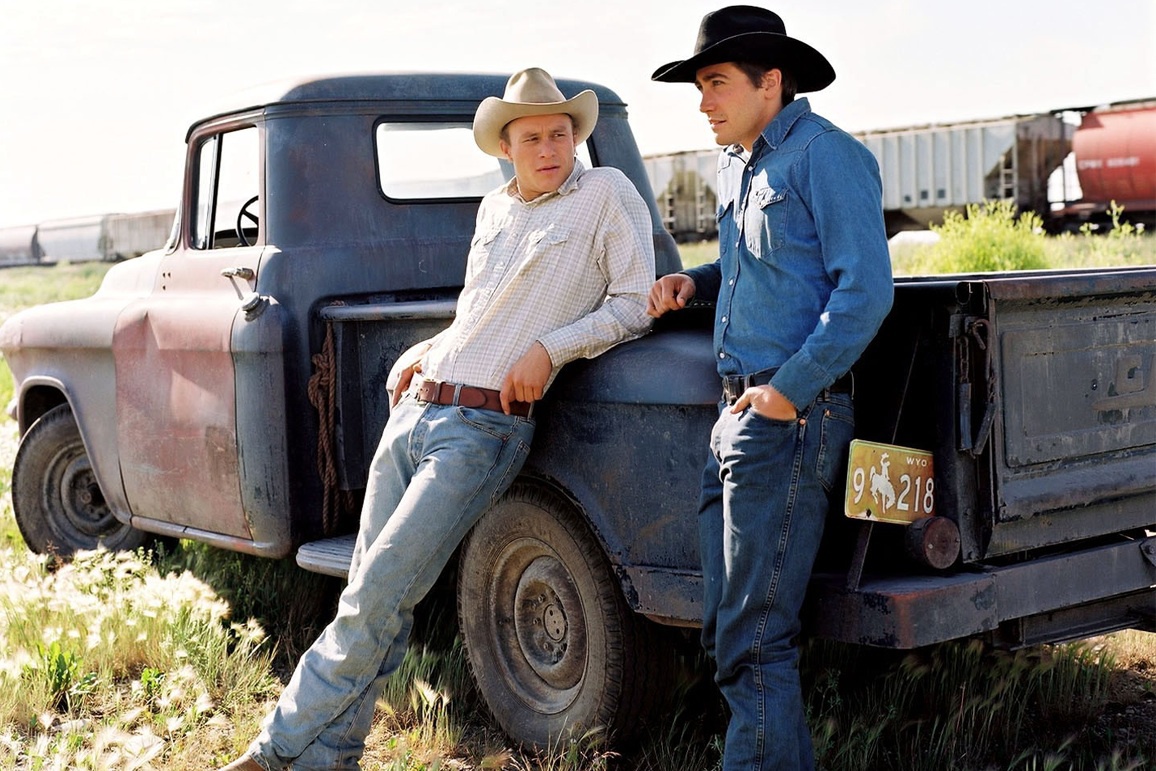 Media representation has played a lot into the stereotypes mentioned above. There were certainly movies where there was mocking and bullying of LGBTQ characters, as well as homophobic jokes. However, even when there were more positive roles in media representation, there was not much nuance, at least in mainstream media. The portrayal was often playing right into the stereotypes that were mentioned above. Brokeback Mountain was a landmark because it was an Oscar-nominated film centered on a homosexual relationship. Since then, I feel like it has become increasingly common to have LGBTQ characters, especially as protagonists, and that their characters have been written and played with increased nuance.
As a teacher, I hope that, if nothing else, I can help my students feel that there is a safe place for them to be authentic and honest about who they feel they truly are. I can be conscious of the language I use and my students use and promote a place that does not mock a particular community for their choices.
Sources:
https://en.wikipedia.org/wiki/LGBT
https://en.wikipedia.org/wiki/Third_gender
Monday, February 6, 2017
Being the "Other"
For my experience of "Being the 'Other'" I attended a nondenominational church service. While I've been Christian my whole life, I have also been Mormon my whole life and have had no reason to attend a nondenominational church before. It was a new experience for me.

The church I chose to attend was Centerpoint Church in Orem. Overall, the experience was positive. The situation generally felt unfamiliar, but not unsafe. I felt compelled to remain anonymous. I didn't want anyone to really notice me. It would've been hard to identify me as someone who didn't belong. I looked like I did. But I didn't really. I didn't know how things worked. I didn't know when we were supposed to stand or sit or the order of things. They try to make things friendly to visitors, which mitigated some of those effects, but some still remained. I still didn't really know what to expect.
Something I think I learned from this is that just because someone looks like they belong doesn't mean they feel that way. I have a roommate right now who is from Denmark. She has blonde hair and blue eyes and speaks English very well. However, she was originally raised in an entirely different culture with different values. Her family is all Danish. She gets along fine, but others in her situation may not have it as easy as she does. There could very feasibly be students in my school and classes who don't look like they belong and feel perfectly at home, and students who do look like they belong and feel entirely out of place. I can't assume, as a teacher, who does and who does not feel like they belong. I also ought to make my classroom someplace safe where people that may feel like outsiders elsewhere can come to feel like they belong.
Below are some songs that we sang at services:

The church I chose to attend was Centerpoint Church in Orem. Overall, the experience was positive. The situation generally felt unfamiliar, but not unsafe. I felt compelled to remain anonymous. I didn't want anyone to really notice me. It would've been hard to identify me as someone who didn't belong. I looked like I did. But I didn't really. I didn't know how things worked. I didn't know when we were supposed to stand or sit or the order of things. They try to make things friendly to visitors, which mitigated some of those effects, but some still remained. I still didn't really know what to expect.
Something I think I learned from this is that just because someone looks like they belong doesn't mean they feel that way. I have a roommate right now who is from Denmark. She has blonde hair and blue eyes and speaks English very well. However, she was originally raised in an entirely different culture with different values. Her family is all Danish. She gets along fine, but others in her situation may not have it as easy as she does. There could very feasibly be students in my school and classes who don't look like they belong and feel perfectly at home, and students who do look like they belong and feel entirely out of place. I can't assume, as a teacher, who does and who does not feel like they belong. I also ought to make my classroom someplace safe where people that may feel like outsiders elsewhere can come to feel like they belong.
Below are some songs that we sang at services:
Monday, January 30, 2017
Cultural Artifacts
As I was considering this assignment, I wondered how I ought to organize this post. I think I will start with things in my culture as an American and then phase into things that are more a part of my personal culture. So, to begin, American culture.

The American flag is a huge symbol and I think so for good reason. Americans don't agree on everything. That is certain. However, most Americans, I think are proud of the history of this country and think it's a great place to live.

I think the recent obsession with Hamilton is a reflection of that. American's love that type of music, but they also love to hear stories of people who helped America become great. I honestly think that Americans just love to think they're awesome.

As stated above, though, there's definitely disagreement. American politics is riddled with the idea that America is the best but only if it's run the right way. This breeds competition and disunity.

This also makes for a general sense of competition in America. Businesses are competing to get the top dollar, which is important, I understand. But it's still promotion of competition.

It also plays int our preoccupation with sports. Sports teams compete against each other. There is often an us vs. them mentality that comes through.

This also plays into our country's admiration of and obsession with heroes. It can be Marvel, Star Wars, athletes, musicians, or other celebrities. We praise and reward those who seem to be extraordinary. We strive to be like them, even though it's often quite unrealistic.

We also have an obsession with entertainment. We are constantly seeking to be entertained by a variety of things. Americans love trivial things that make them laugh. This is what fuels things like Buzzfeed and Netflix. They are always there to entertain us.

We are also very demanding when it comes to entertainment. That's the value that people see in Netflix. It's available whenever you want and the marginal cost of watching an additional episode or movie is zero. It's so easy.
 Americans are also very fond of their technology. This is in part due to the obsession with entertainment. People insist on being connected as much as possible. iPhones, smart watches, tablets and all technology is constantly used in our culture.
Social media is also a large part of my culture. Many people spend lots of time on Facebook, Instagram, and Twitter, scrolling through their newsfeeds, looking at what their friends are doing with their lives.
Also, food. So much food. Most of it delicious and unhealthy. But food is a big deal to Americans. These type of food videos are all over social media and the internet.

Americans also love to think that their opinions matter. They like to feel a part of what is happening and that their thoughts are validated. Hence websites such as Urban Dictionary and Huffington Post. Places where people can go to say what they mean and literally define the language we use daily.

A big part of my personal culture is heavily influenced by the Church of Jesus Christ of Latter-Saints. I have been Mormon my whole life and it's a large part of my family heritage.

A large part of my culture is also family. My religion emphasizes the importance of family and it's role in creating a good life.



Reading books is also a huge part of my culture. I especially have an affinity for children's literature and young adult books. I think that one of the best things that parents can do for their children is read to them.

Math is a huge part of my culture. Seeing as I'm going to be a math teacher, it's very important to me that people feel positively towards math. Also, I find math fascinating and that it teaches a very good way of thinking.

I spent eighteen months serving a mission in Texas. Thus, I feel like I'm a Texan at heart now. I used to think Texans were annoying for loving Texas so much. Then I lived there. Now I defend it. I have become one of those people who love Texas so much.

Lastly, a huge part of my culture is music, especially musicals. I love musicals. I could listen to nothing but musicals and be quite happy with my life. In fact, I do that quite frequently.
Looking at the artifacts of my culture (beliefs, values, customs, rituals, etc.) I was struck with just how white, middle class, suburban, and christian all of my personal artifacts were. Church, education, music, reading books--all of these are so much of who I am. That's not problematic, but it certainly will influence me as a teacher. There is so much more in the world than what I value and what I enjoy. Certainly, some of the things that I value personally are very important to me as a teacher, but I definitely need to be very value-informed in order to approach my students well. I have to assume my students are not coming from the exact same place as me, because they won't be. There will always be some difference. This makes me want to be involved in the community of my school so that I can be more informed and connected to my students.
Subscribe to:
Posts (Atom)